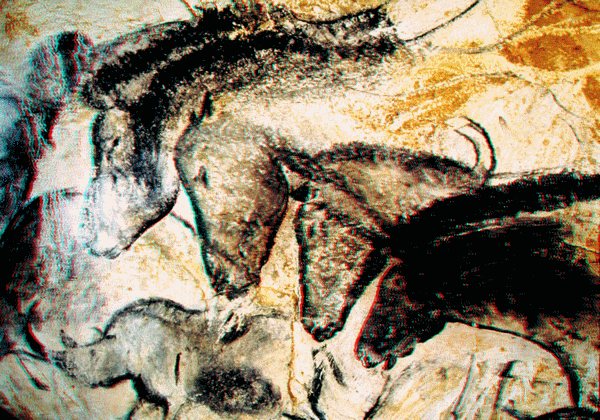
Please notice that 1) This website is still under construction 2) All the pictures on display are in stereoscopic 3D. |
This experimental website—still under development—was initially designed for a young audience, the kind of young people who are turning away from museums—deemed too old-fashioned and frequented only by old folks—and instead becoming engrossed in books illustrated with poor black-and-white drawings. Must I confess that I hate manga? How can anyone prefer those poorly made things to the masterpieces of people called Hiroshige, Rübens, Hokusai, Dürer, Rembrandt, Michelangelo, Leonardo, Van Gogh, Rodin, Velazquez...?
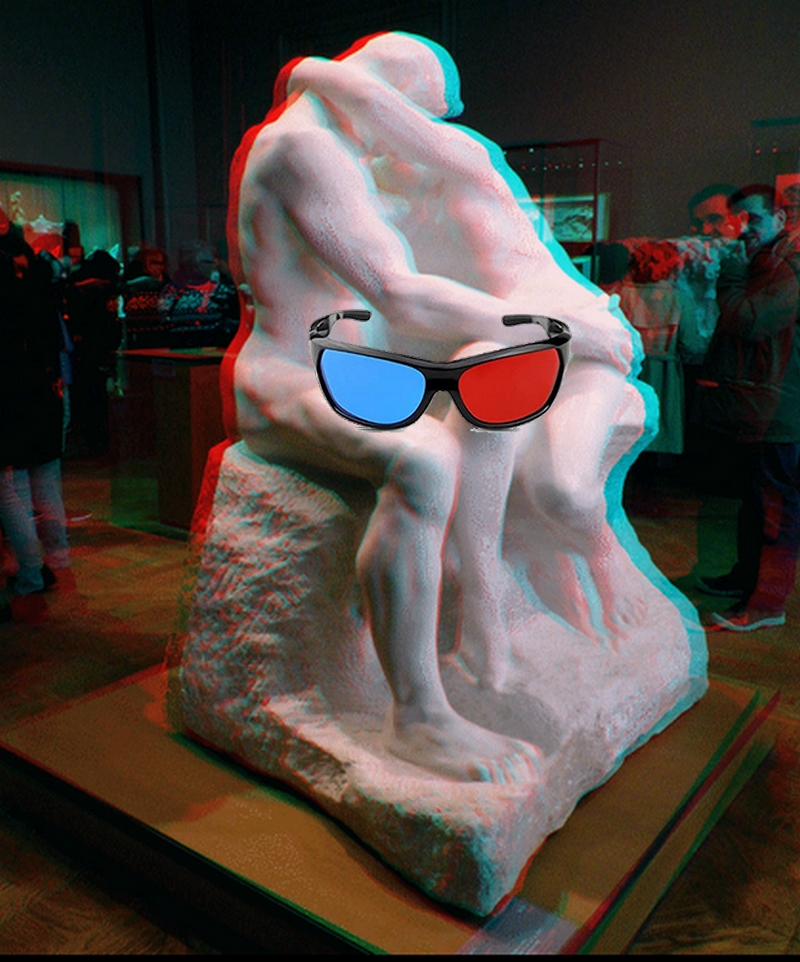 |
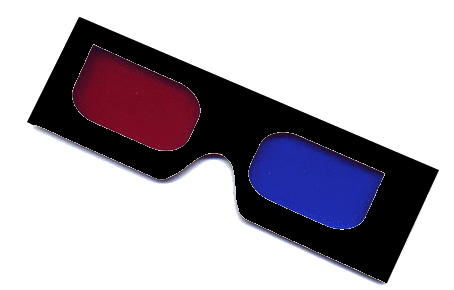
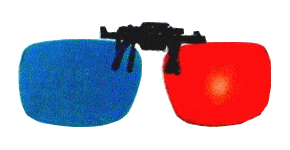
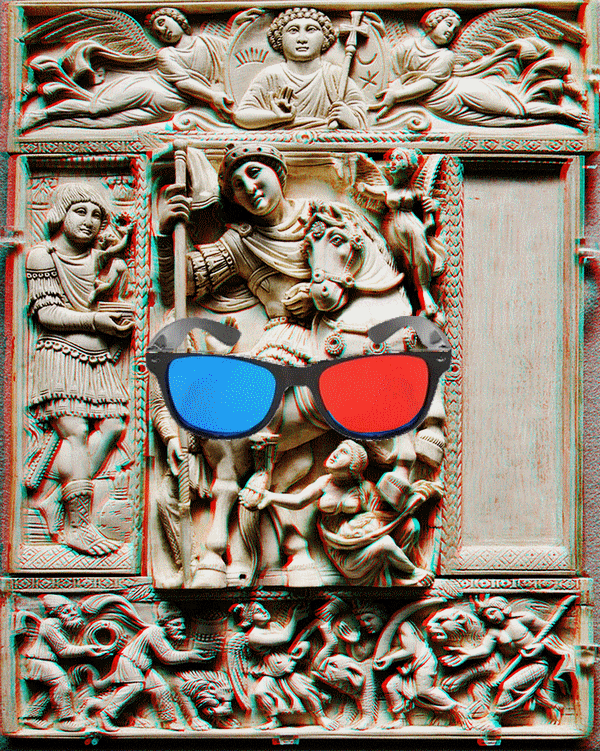
Before we continue, however, you should definitely get yourself a pair of red-cyan glasses like the ones pictured below: on the left, a simple cardboard model; on the right, an orthosis for glasses wearers that attaches directly to the current glasses.
 |
 |
 |
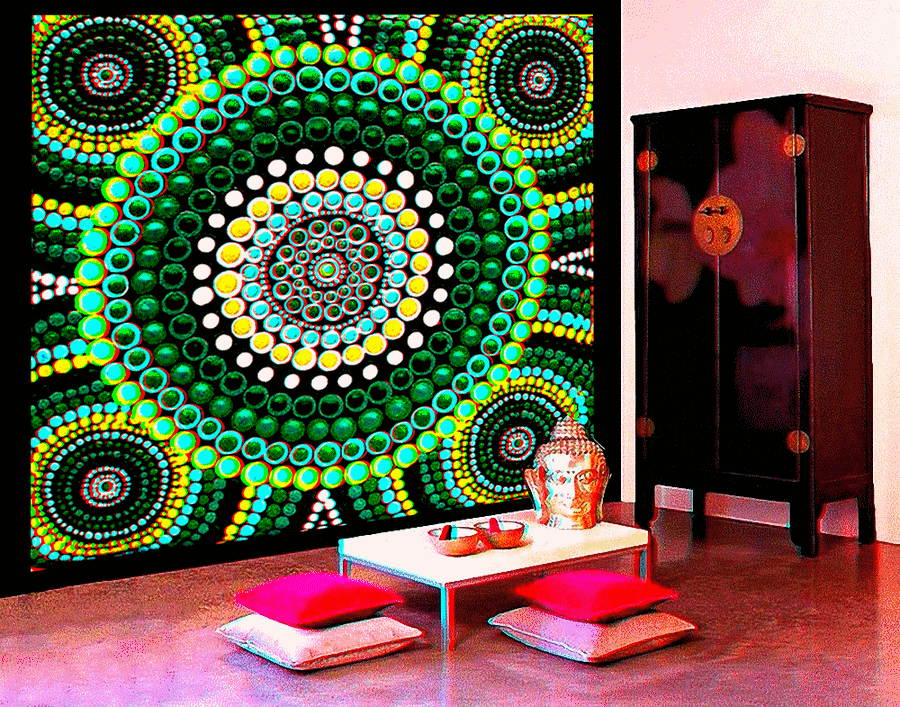 |
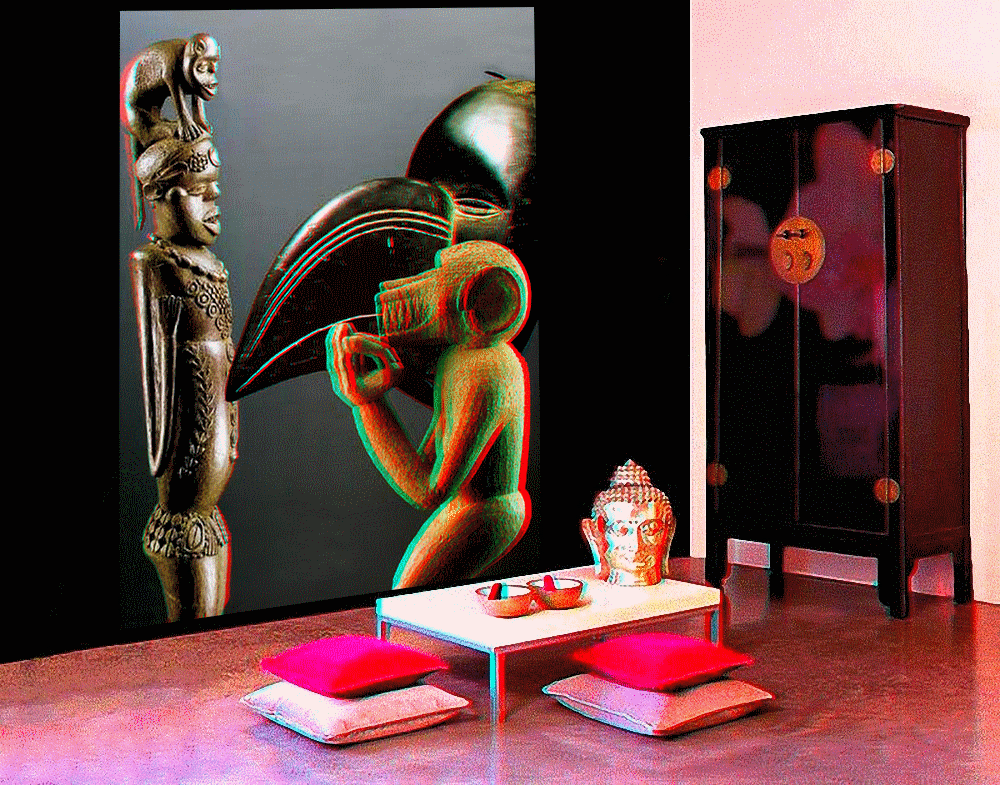 |
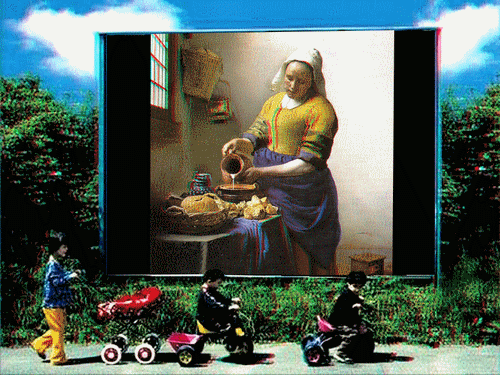 |
Yet it's a fact: among the so-called "cultural" products that sell best, especially to young people, are video games and manga.
I think there's an explanation for all that: the incompetence of "older" generations and their smug arrogance ("We're cultured people, and you have to do what we want you to do!") which, as is often the case, generates reactions of revolt. This is how the United Kingdom, entrenched in its traditions around the monarchy, generated movements like punk, totally opposed to the dominant culture.
My opinion is that if we want to prevent tomorrow's museums and exhibition halls from being visited only by decrepit old people, we urgently need to invent new ways to interest young people in the arts. Someone like James Cameron seems to have succeeded perfectly in that. Look at his Avatar series. Funny you should mention that Avatar is the film sequel that popularized 3D. I couldn't help but be inspired by it!
Helpful reading:
"James Cameron's third journey to the planet Pandora is likely to be a smash hit in this format [3D], which remains shunned for all other films. The reasons are numerous, the culprits many. (...) "We blew it." Jeffrey Katzenberg, the powerful head of Dreamworks studio, did not mince words when assessing the state of 3D in the movie industry, as early as 2016." (Source)
Who goes to the movie theaters nowaday? Mostly a young audience around 20-25 years old. The others, too old or too lazy, sprawl in their armchairs watching Netflix or Disney-TV. People like James Cameron draw crowds to movie theaters, as proof that 3D (Cameron-style), works. In short, Cameron has found the right formula to speak to HIS audience, something his colleagues, who fancy themselves intellectuals or psychoanalysts, are incapable of doing.
The fact is, when I wander around with my strange gear, the main people who jump on me and bombard me with questions are young people. How reassuring!
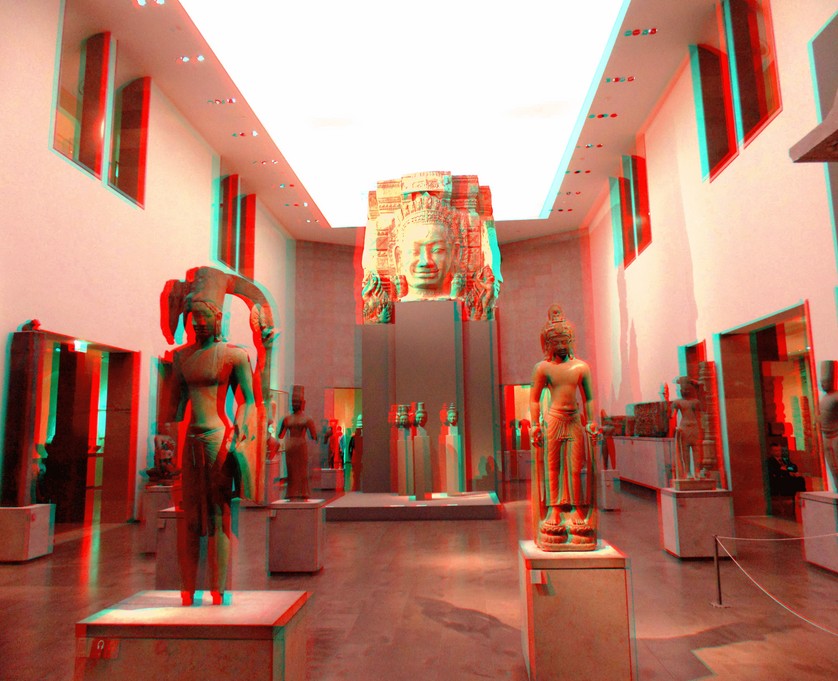 |
 |
I'm going to give you a little challenge: give 3D glasses to some young people you know and ask them to look at the images on this modest website, making sure to note their comments. I have no intention of convincing them to turn away from the horrible drawings in manga. I think I can convince a great many of them that works of art can be discovered in ways other than through boring commentary from pretentious and pompous "experts."
Let's take the following image: a photograph taken by an admirer of Edgar Degas. Would you manage to recognize the little ballerina (a future icon of French cinema. Initials B.B.) ? Of course, both images habe been faked into 3D my means of the computer.
 |
By the way, did you know that stereoscopic photography was invented around 1830 by a British citizen and enjoyed its heyday between the American Civil War and the first third of the 20th century—almost a century?
In France (where I live), unlike in Germany, where stereoscopy is still widespread, especially in publishing and the press, such glasses aren't always easy to find in stores, but you can easily order them online.
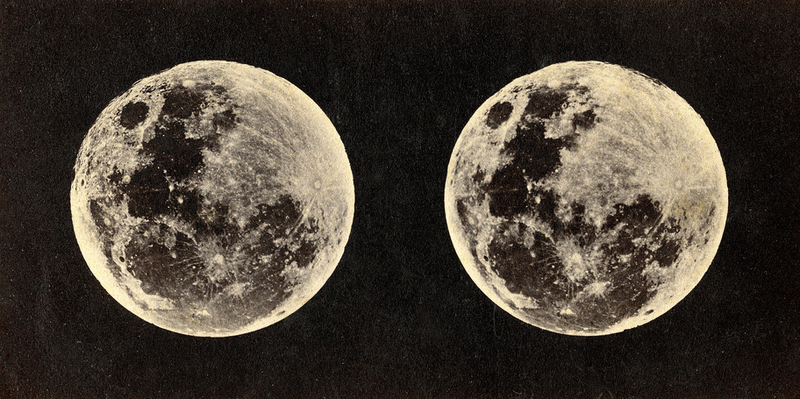
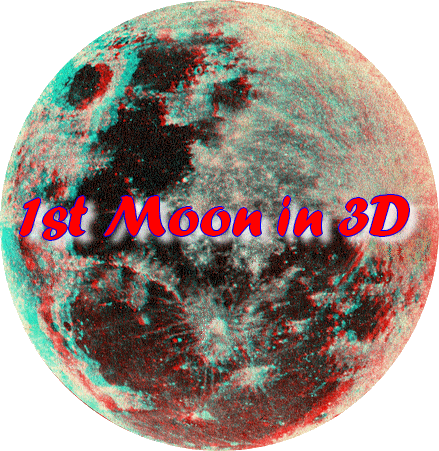
Once you have those little gadgets, you can enjoy the power of displaying objects in what was then called "streoscopy," such as the very first image of the moon, photographed by an American citizen (about 1860): first, we have the two original images taken by that amateur astronomer, and below them the stereoscopic image I created on my computer.
 |
 |
 |
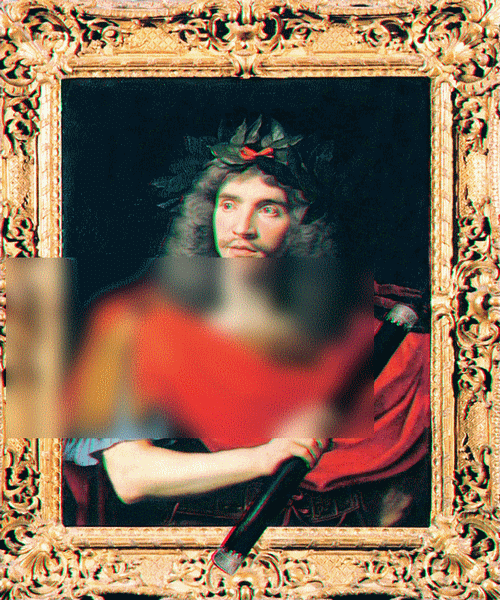
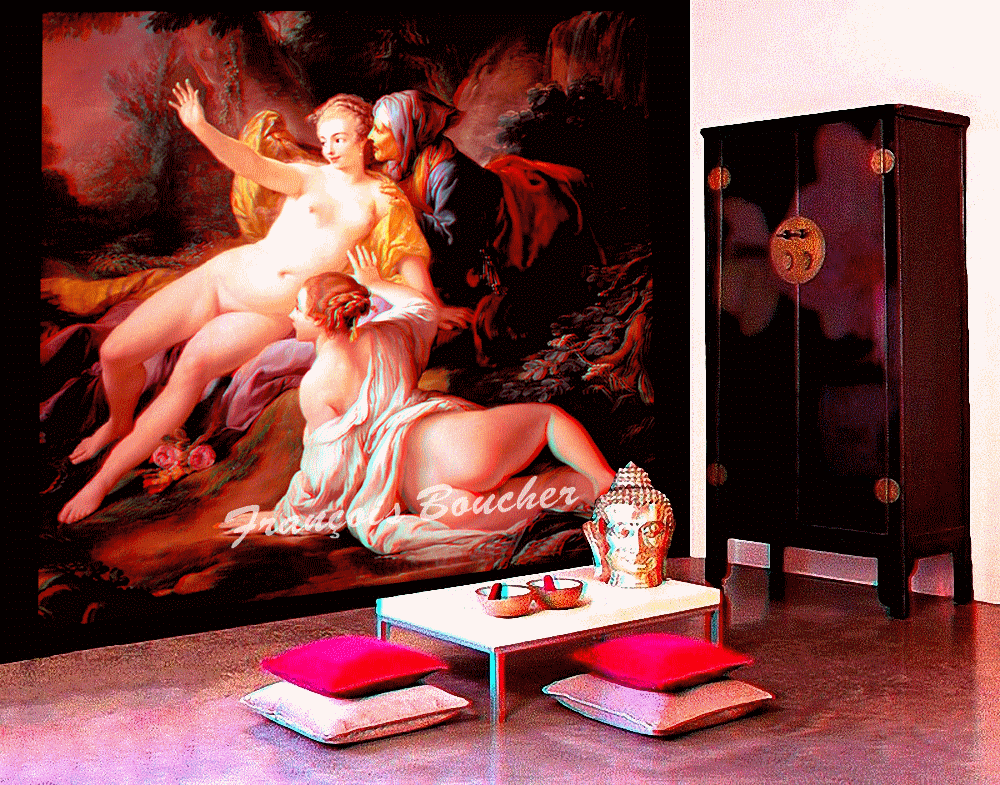
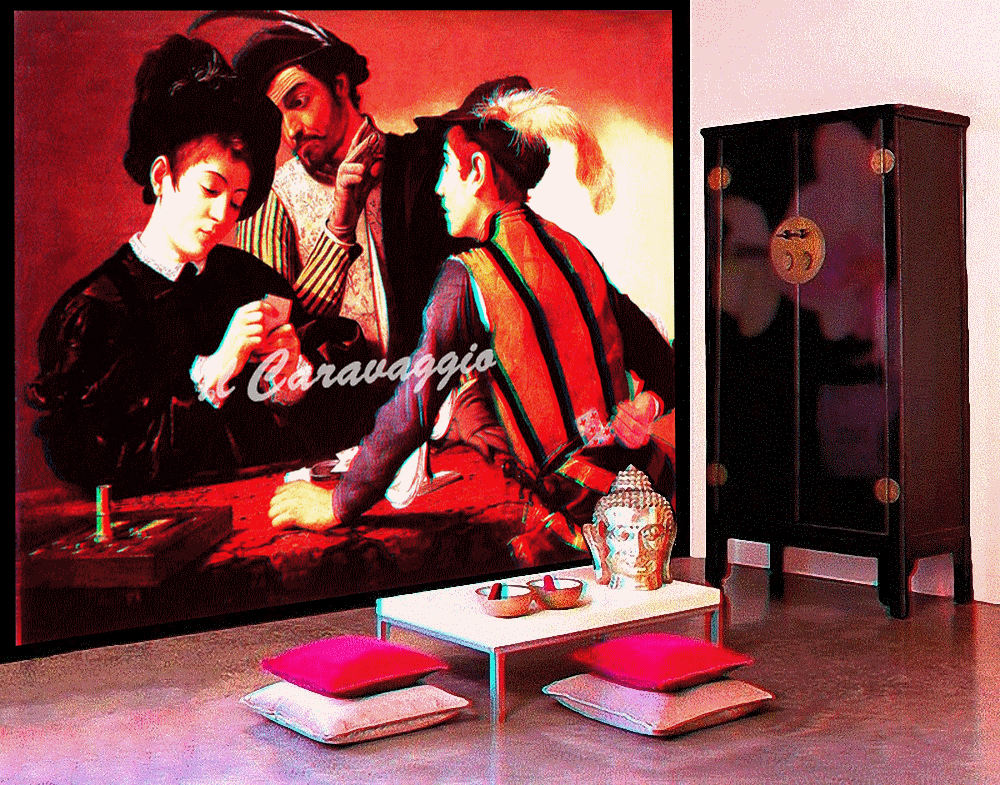
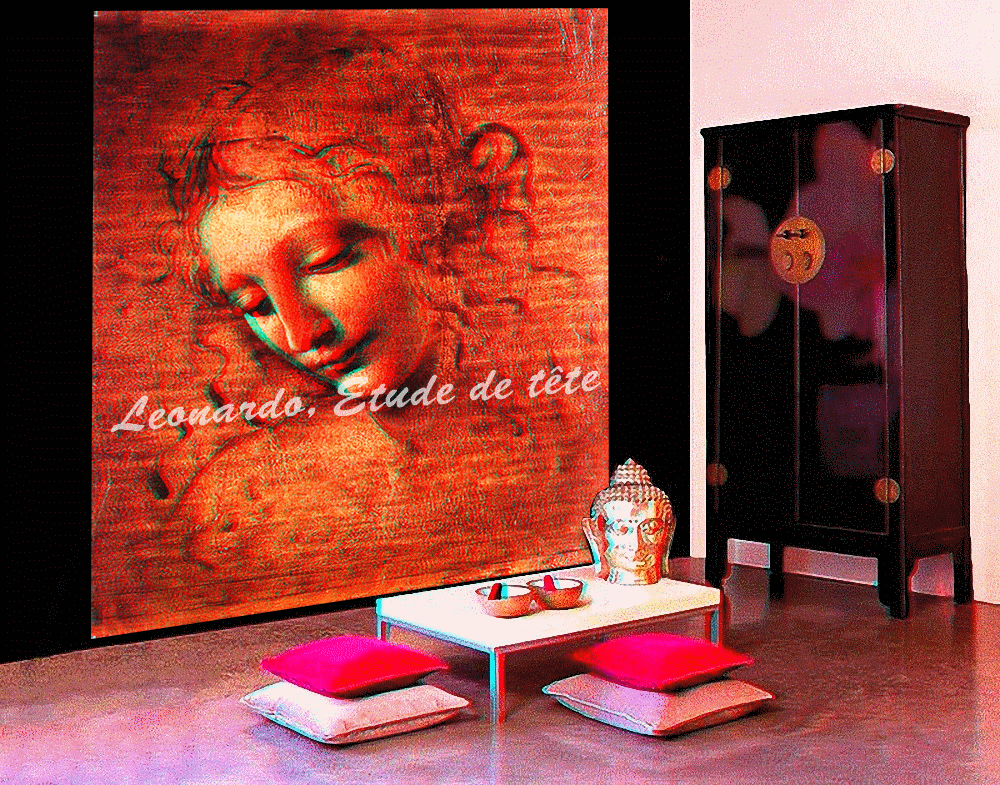
And since you seem interested in stereoscopy, I present below a small sample of 3D images, inviting you to consider how they were created (I mean without any A.I.).
 |
 |
 |
 |
 |
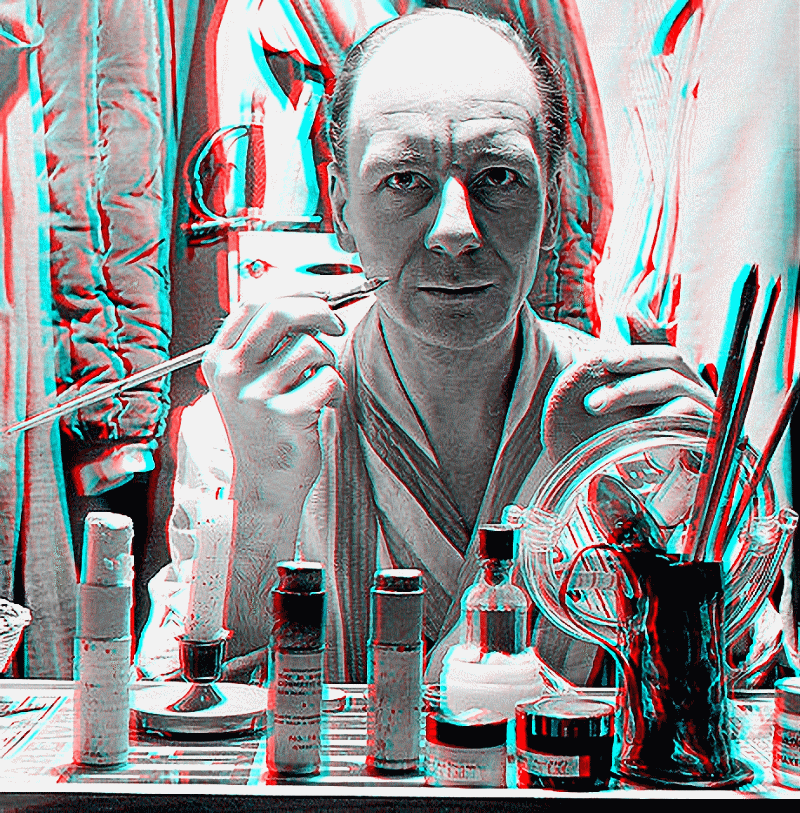
By the way, do you recognize that famous English comedian ?
 |
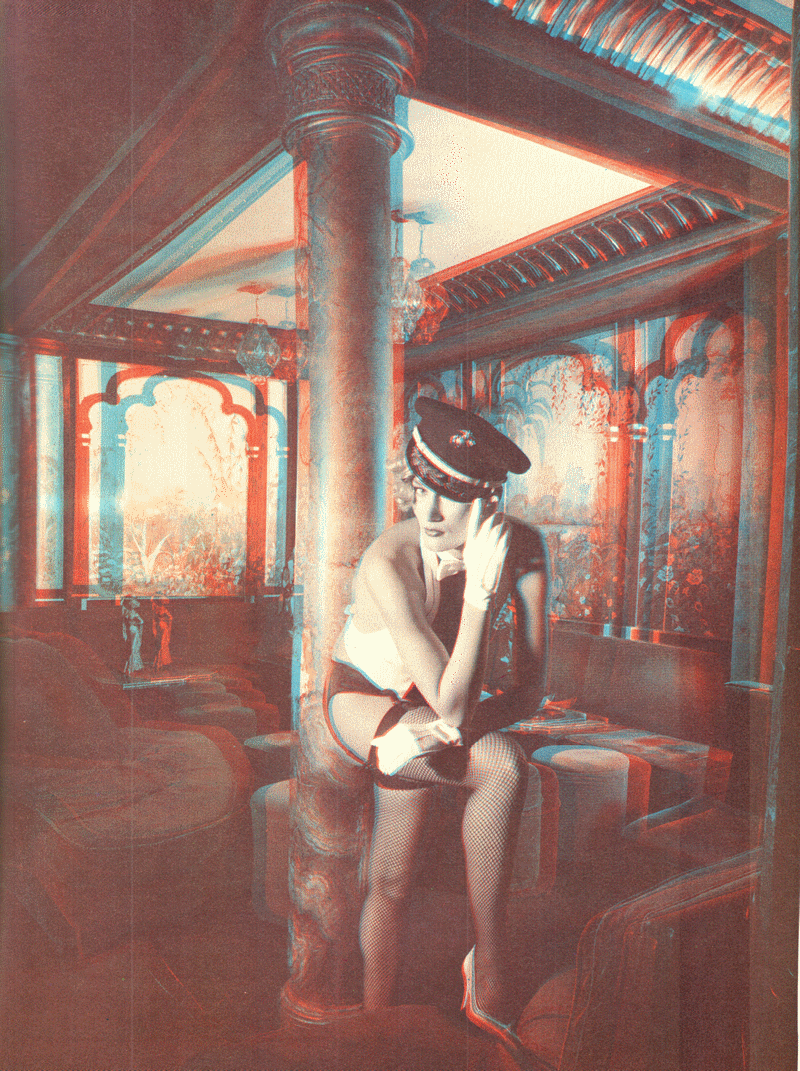
The following is an excerpt from the first book that introduced me to 3D photography, a book published in Germany and supposedly promoting French lingerie. What can you expect? In many countries, 'France' still means 'lingerie, wine, gastronomy, luxury,' etc. The images are a bit faded, admittedly, but hey, it was still the days of film!
 |
 |
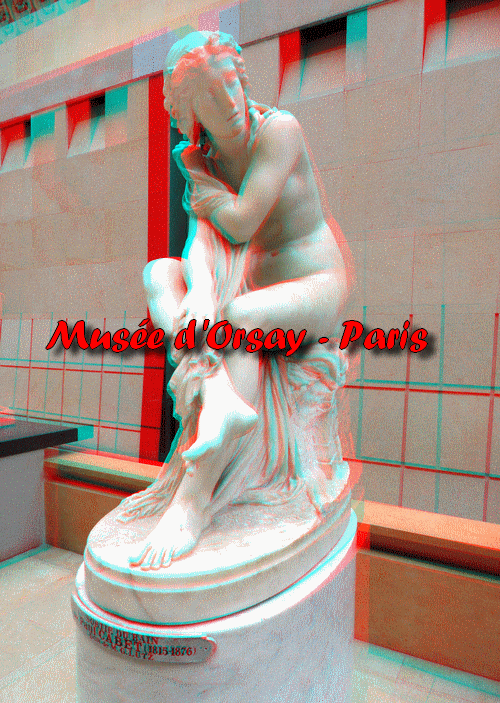
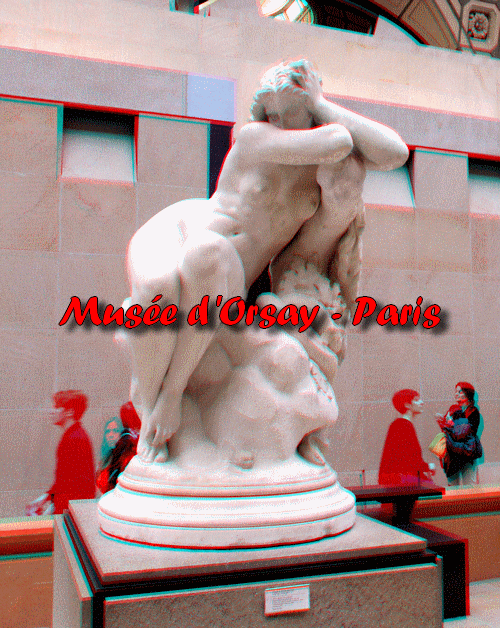
By the way, what can be said of some of the magnificent marble sculptures that adorn the central aisle of the Musée d'Orsay in Paris? I should point out, however, that what follows was created using entirely different materials than those shown above.
 |
 |
 |
 |
 |
Now you should have understood that stereoscopic images are obtained in two ways: firstly, using specialized equipment to simulate the function of our two eyes and generate two images that were formerly examined by inserting them into the two slits of a stereoscope. These images can also be 'fused' into one using a computer, for viewing with special glasses. The other method involves using dedicated computer programs to recreate stereoscopic virtual reality—that is, two separate images—from a single original image. |
Do you like quizzes? For your information, as a (good) teacher I love to challenge my students with some surprising questions.
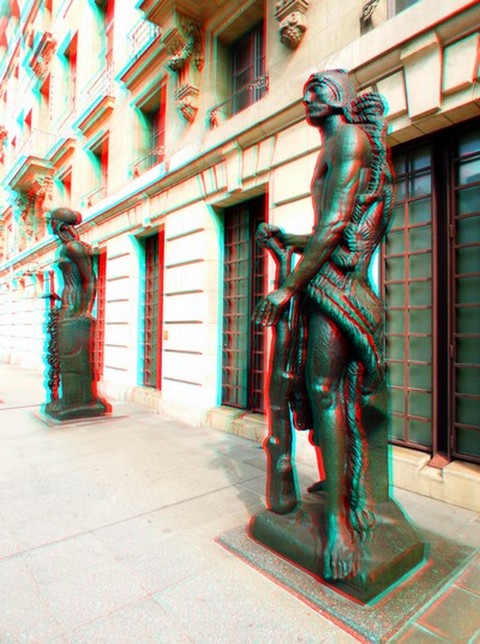
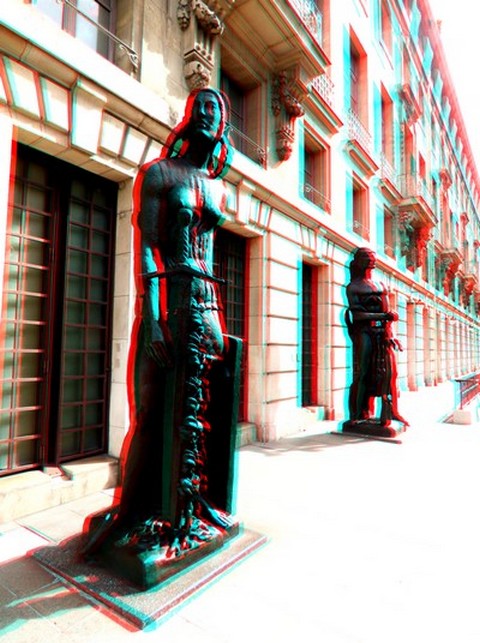
These two huge warriors are visible somewhere in Paris. Unfortunately very few people (tourists and even Parisians) are aware of their existence! Given that you are very smart people, who have been to Paris many times, just guess: 1) the name of the sculptor; 2) the location of the statues.
 |
 |
Paris, Rome, Munich, Brussels, Florence, Salzburg... The advantage of exploring cities on foot is this:
1) your belly stays flat;
2) you discover things that aren't in any tourist guide.
We are in Brussels, and then... Wow! Rodin's Thinker! Here?
 |
Salzburg, Mozart's birthplace. How many tourists, or even Salzburg residents, know about this statue of Wolfgang Amadeus? Very few. To their credit, the site can mostly be visited in dry weather, provided you are in good physical condition and wearing sturdy hiking boots.
 |
 |
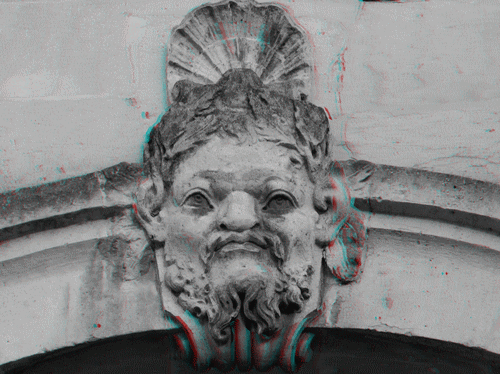
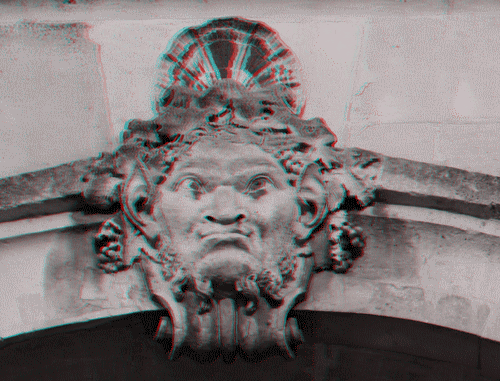
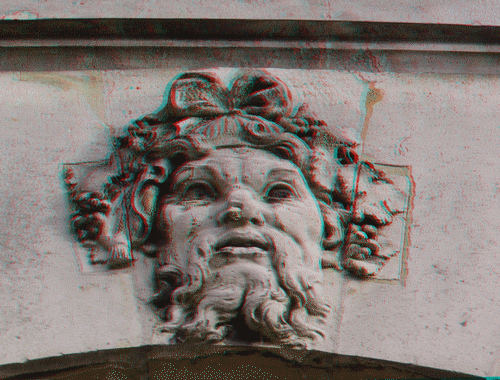
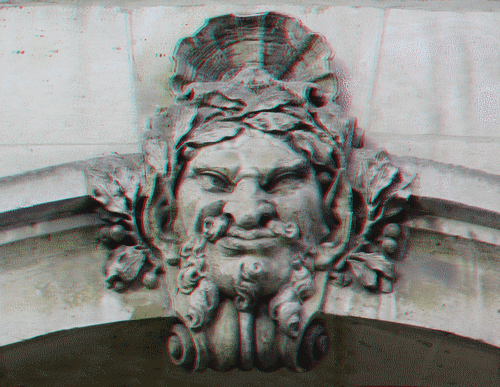
Tens of thousands of tourists visit the Palace of Versailles every weekday, but none of them could tell you where these strange mascarons are located. Again, it was by walking around and poking about that I discovered them. And you?
 |
 |
 |
 |
Not being completely sadistic I inform you that the answers to all these quizzes can be found right here on this website. |
Contact : rwboula@gmail.com |
